


How to Cope With Postpartum Depression
Postpartum depression (PPD) is a common type of depression that typically happens after giving birth. Find out more, here.
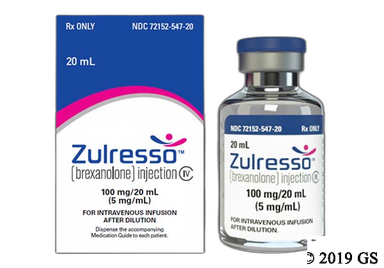
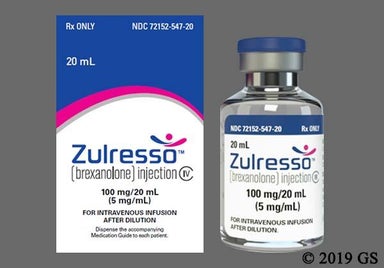
Zulresso (brexanolone) is a newer injectable medication used to treat postpartum depression. It's infused through the veins and the infusion takes about 2 and a half days. There's a risk that you might get very drowsy or suddenly pass out while getting Zulresso (brexanolone), so you'll be closely monitored by your healthcare provider during treatment. It's available as a brand-name medication only, which can be expensive.

| Common Brands | Zulresso |
|---|---|
| Drug Class | GABA modulator |
| Controlled Substance Classification | Schedule IV |
| Generic Status | No lower-cost generic available |
| Availability | Prescription only |

Zulresso (brexanolone) can cause some serious health issues. This risk may be even higher for certain groups. If this worries you, talk to your doctor or pharmacist about other options.
 Zulresso (brexanolone) can make you very sleepy, which can affect your ability to focus, think, or react, and even cause you to lose consciousness. This side effect is more likely to happen or be more intense if you drink alcohol or take other medications that cause sleepiness (e.g., opioids, benzodiazepines, sleep medications) while receiving Zulresso (brexanolone). Your provider will monitor you for excessive sleepiness and adjust your dose or stop your medication, if needed. Don't drive or operate machinery until your feeling of sleepiness from Zulresso (brexanolone) has completely gone away.
Since Zulresso (brexanolone) can make you very sleepy and potentially lose consciousness, it's only available through a drug safety program called the Zulresso REMS. All hospitals or facilities that can give Zulresso (brexanolone), pharmacies that dispense Zulresso (brexanolone), and mothers who take Zulresso (brexanolone) must be registered with the REMS program. This is to make sure the medication is distributed and given under the safest conditions possible for you.
Antidepressant medications like Zulresso (brexanolone) can cause suicidal thoughts and behaviors. Symptoms include thoughts of harming yourself, depression, and aggressive behavior. This can happen to anyone taking Zulresso (brexanolone), but the risk is higher if you have a history of depression or if you're 18 to 24 years old. Let your provider know if you or your loved ones notice a change in your mood or behavior, or if you have thoughts of hurting yourself while, or soon after, receiving Zulresso (brexanolone).





Prescription savings
Stop paying too much for your prescriptions. Compare prices, get pharmacy coupons, and save up to 80%. Find expert answers to your health questions so you can make the best decisions for yourself and your family.
Health conditions
Medications & treatment
Access & affordability
Medication discounts

Zulresso is used for the treatment of postpartum depression (PPD). PPD is when the mother develops depression after the birth of her baby. PPD is a common problem and happens to one in every nine mothers. Your provider will screen you for PPD after you give birth and if your results are positive, you might be eligible to receive Zulresso.
Zulresso is part of a drug safety program because it can put you at risk for serious side effects, such as passing out or feeling extremely drowsy. If you're prescribed this medication, you must register through the Risk Evaluation and Mitigation Strategies (REMS) Program. All providers, pharmacies, and healthcare facilities that care for you while you receive this medication also must register with Zulresso REMS. This program makes sure that you and your providers are aware of the serious side effects with this medication and know what to do if they appear.
It's not exactly known how Zulresso works to help mothers with PPD, but it's thought to work by balancing certain chemicals in your brain involved with mood.
The dose of Zulresso depends on your weight and will be given as a continuous intravenous (IV) infusion over 60 hours (2 and a half days). Your provider will first start you on a low dose, then slowly raise the dose depending on how you're responding to the medication. When it's close to the time to end your infusion, your provider will slowly lower the dose before completely stopping the medication. You won't be able to receive Zulresso if you have severe kidney problems because one of the inactive ingredients in the medication can build up to harmful levels in your body.
You'll get your Zulresso infusion at a certified hospital or treatment center. Each infusion will take about 2 and a half days. You'll probably be able to receive visits from loved ones during the infusion, but you should arrange for full-time childcare for this time. During your treatment, a trained healthcare provider will check on you every 2 hours while you're awake to look for signs of extreme drowsiness. They'll put a monitor on your finger to check your pulse and oxygen level. If you feel like you can't stay awake when you're supposed to be awake, or if you think you're going to black out, let your provider know right away because they might need to pause your infusion.
Some possible side effects include sleepiness, dizziness, and dry mouth. Less common side effects include diarrhea, flushing (feeling warm all of a sudden), and passing out (see risks and warnings section for more information).
