Key takeaways:
Swimming and running are calorie-burning, cardio exercises that can boost your heart health and fitness.
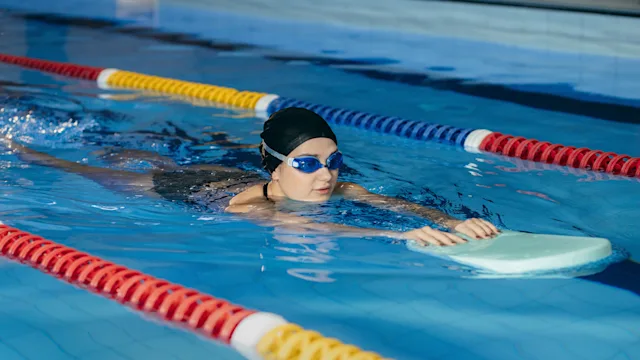
Swimming is a low-impact, full-body workout that’s easy on the joints and can support injury recovery. Running is an accessible high-impact workout that supports strong bones.
You can add one or both exercises to your fitness plan, as swimming can help you recover from running workouts.
Both swimming and running are tried-and-true cardio exercises. They’re versatile and great for beginners and longtime athletes alike. Both can help you meet important fitness goals. But is one more beneficial than the other?
Below, we’ll break down the benefits of swimming and running to help you decide which exercise suits your needs.
Is swimming or running a better workout?
Aerobic, or cardio, exercise is critical for a healthy lifestyle. Both swimming and running provide an excellent cardio workout that can lead to improved physical and mental health.
Search and compare options
In a small study, researchers compared how each activity affects the heart. They found that elite runners had lower resting heart rates than elite swimmers. (A lower resting heart rate may indicate better cardiovascular fitness.) But the difference was small. And both groups had significantly better heart health and function than people who weren’t physically active.
Swimming and running have been linked to longevity. Both aerobic activities may help you live a longer, healthier life. So choosing between swimming and running comes down to your goals and which workout you enjoy the most.
Here’s what the research says about running versus swimming to reach common fitness goals.
Swimming vs. running for burning calories
Whether you go for a swim or run, you’ll burn calories — though running usually burns more calories. But exactly how many calories you burn will vary by the intensity, time, and type of workout you do.
According to the American Council on Exercise (ACE), during a 30-minute swimming or running workout, a person who weighs 175 lbs might burn:
Swimming at a casual pace: 277 calories
Swimming at a vigorous pace: 396 calories
Running at 5 mph (12 min/mile): 317 calories
Running at 7 mph (8.5 min/mile): 456 calories
Based on these estimates, running burns more calories than swimming. That doesn’t necessarily mean it’s the best calorie-burning workout. For example, some people can swim faster or longer than they can run. In that case, swimming would be the better choice to burn calories. But, running might be a better option when you want to squeeze in a quick workout.
Swimming vs. running for losing weight
Cardio can help you lose weight when paired with other lifestyle choices, such as a nutritious diet. So both swimming and running can support your weight-loss journey. The key is consistency.
People who lose weight at a steady pace may be more likely to keep it off. That means the best choice is whichever aerobic exercise you enjoy enough to do regularly. And don’t forget to include resistance and strength-training sessions, which can also help burn fat.

Read more like this
Explore these related articles, suggested for readers like you.

Swimming vs. running for strengthening muscles
Swimming and running can both strengthen your muscles. But each workout activates muscle groups differently.
Muscles targeted by running
Running relies mainly on your lower-body muscles, including your:
Gluteal muscles (butt)
Hip flexors
Quadriceps (front of the thighs)
Hamstrings (back of the thighs)
Calves
Running also engages your core, which supports posture, balance, and functional movement. While your arm swing can help with balance and speed, running doesn’t really engage your upper-body muscles.
Muscles targeted by swimming
Swimming, on the other hand, is a great exercise if you want to give your arms and other upper-body muscles a workout. Each stroke –– such as the butterfly, breaststroke, or freestyle –– requires a strong core to coordinate your movements.
Depending on the stroke, swimming may engage the following muscles:
Arms (biceps and triceps)
Shoulders (deltoids and rotator cuff)
Chest (pectorals)
Back (trapezius and latissimus dorsi)
Abdominals (rectus abdominis and obliques)
Hips (hip flexors)
Gluteal muscles
Legs (quadriceps, hamstrings, and calves)
Swimming vs. running for bone health
Both swimming and running can support bone health and improve bone mineral density. As a high-impact exercise, running can be a particularly good workout to keep your bones strong. But if you have joint issues, swimming may be a better option.
What are the benefits of swimming?
Consider these top benefits of swimming when planning your weekly cardio workouts.
Swimming provides low-impact exercise
Unlike running, swimming is a low-impact cardio exercise that puts minimal strain on the bones, muscles, and joints. That makes it a great option for people with musculoskeletal conditions, such as:
Fractures
Sprains
Swimming may even help treat some of these conditions. Studies suggest it could improve bone mineral density in older women with osteoporosis, for example. Swimming has also been shown to reduce joint pain and stiffness in people with osteoarthritis.
Swimming is a total-body workout
Swimming provides a total-body workout by activating upper, core, and lower body muscles. Research suggests that swimming strengthens your heart and lungs, as it may improve cardiorespiratory fitness. Cardiorespiratory fitness is the ability of your heart and lungs to use oxygen to generate energy. This is critical for your exercise performance and overall health.
Swimming supports active recovery
Recovery is an integral part of a healthy fitness routine. Passive recovery involves doing little to no physical activity on rest days. This type of recovery can help you heal from injuries. Active recovery uses low-impact exercises like swimming to lower muscle tension and soreness after a high-intensity workout.
Active recovery can help you avoid overtraining and injury. It may also improve your athletic performance by helping your muscles recover and adjust to vigorous exercise. One study found that runners who swam after a run performed better the next day. That’s a good reason to add swimming and running to your exercise routine.
What are the benefits of running?
If you’re comfortable with high-impact exercise, running might become your go-to cardio workout because of these key benefits.
Running supports strong bones
Running is a high-impact exercise that puts more stress on your bones and joints, including the hips, knees, and ankles. But that isn’t necessarily a bad thing. Healthy stress from high-impact, weight-bearing exercises like running can keep your bones strong.
Studies show that doing high-impact exercises may increase bone density. That’s helpful because bone mass declines with age, increasing the risk of osteoporosis. So in addition to being good for your knees and other weight-bearing joints, running may lower your risk of osteoarthritis.
Talk with your primary care provider before beginning a running routine if you have any injuries or conditions that affect your bones, muscles, or joints.
Running takes you to new destinations
You can run almost anywhere. So this versatile sport is excellent for people who like a change of scenery when they work out. One day, you might hop on a treadmill at the gym and watch TV while you work out. And the next, you might explore a new neighborhood or park. Running outdoors may also give you an added mental health boost thanks to the time in nature.
Many community spaces have paved trails, bike paths, or boardwalks that are great for running. And websites like AllTrails allow you to find running trails near you.
Running is accessible
A lack of resources is one of the main barriers to people working out. The cost of gym memberships and exercise equipment can add up fast. But you only need comfortable clothes and supportive shoes to start running. That gives running an edge over swimming on convenience and accessibility for most people.
Swimming vs. running: Which is right for you?
Ultimately, the best workout for you is whichever one you enjoy, can do safely, and will stick with long term. So think about your health, fitness goals, and preferences when choosing between swimming and running. Here’s a comparison table to help you decide.
When to choose swimming | When to choose running |
|---|---|
You want a full-body workout. | You want to target your leg muscles. |
You want a low-impact workout that’s easy on the joints. | You want a high-impact workout that promotes bone health. |
You have access to a pool or body of water. | You want an equipment-free workout. |
You want to support active recovery. | You want to burn calories quickly. |
If you still can’t decide whether to keep your workout on land or head for the water, why not add both swimming and running to your routine? Running and swimming make great complementary workouts. Swimming sessions can help you recover from your runs, for example.
Frequently asked questions
When comparing swimming versus running (or any other activity), the intensity of the workout comes into play. Another consideration is what you’re measuring, such as total calories burned, muscle groups targeted, or enjoyment. When it comes to burning calories, for example, running generally burns more calories than swimming. In the end, the pros and cons of each partly depend on your personal health and fitness goals.
Swimming may not be the best activity to support recovery from a rotator cuff injury. A physical therapist will consider your specific injury and its severity before recommending specific exercises to heal and strengthen your rotator cuff. Repetitive overheard motions can be painful with a rotator cuff injury, so they probably won’t recommend swimming strokes like butterfly or freestyle at first.
Yes, regularly swimming can help support tendon strengthening. Water provides low-impact, gentle resistance in comparison to the more high-impact effects of running. But swimming can also lead to overuse injuries like swimmer’s shoulder. So it’s important to maintain proper form, alternate strokes, stop if you feel pain, and to build up a workout routine over time.
When comparing swimming versus running (or any other activity), the intensity of the workout comes into play. Another consideration is what you’re measuring, such as total calories burned, muscle groups targeted, or enjoyment. When it comes to burning calories, for example, running generally burns more calories than swimming. In the end, the pros and cons of each partly depend on your personal health and fitness goals.
Swimming may not be the best activity to support recovery from a rotator cuff injury. A physical therapist will consider your specific injury and its severity before recommending specific exercises to heal and strengthen your rotator cuff. Repetitive overheard motions can be painful with a rotator cuff injury, so they probably won’t recommend swimming strokes like butterfly or freestyle at first.
Yes, regularly swimming can help support tendon strengthening. Water provides low-impact, gentle resistance in comparison to the more high-impact effects of running. But swimming can also lead to overuse injuries like swimmer’s shoulder. So it’s important to maintain proper form, alternate strokes, stop if you feel pain, and to build up a workout routine over time.
The bottom line
Swimming is a low-impact exercise that’s often well suited for people with joint conditions or injuries. On the other hand, running is a convenient, high-impact exercise. Both can burn calories, strengthen muscles, and boost heart health. So the winner in this debate for the best cardio workout is up to you. Or why not try both exercises for a well-rounded fitness routine?

Why trust our experts?



References
Alkatan, M., et al. (2016). Improved function and reduced pain after swimming and cycling training in patients with osteoarthritis. The Journal of Rheumatology.
American Heart Association. (2024). Breaking down barriers to fitness.
Currie, K., et al. (2018). Left ventricular structure and function in elite swimmers and runners. Frontiers in Physiology.
Fetters, K., et al. (2020). Exploring the role of the lateral gluteal muscles in running: Implications for training. Strength and Conditioning Journal.
Hamner, S. R., et al. (2010). Muscle contributions to propulsion and support during running. Journal of Biomechanics.
Lahart, I. M., et al. (2018). Chronic physiological effects of swim training interventions in non-elite swimmers: A systematic review and meta-analysis. Sports Medicine.
Lazovic-Popovic, B., et al. (2016). Superior lung capacity in swimmers: Some questions, more answers! Revista Portuguesa de Pneumologia.
Lee, D. C., et al. (2017). Running as a key lifestyle medicine for longevity. Progress in Cardiovascular Diseases.
Lo, G. H., et al. (2017). Is there an association between a history of running and symptomatic knee osteoarthritis? A cross-sectional study from the osteoarthritis initiative. Arthritis Care & Research.
Lum, D., et al. (2010). Effects of a recovery swim on subsequent running performance. International Journal of Sports Medicine.
Oja, P., et al. (2017). Associations of specific types of sports and exercise with all-cause and cardiovascular-disease mortality: A cohort study of 80,306 British adults. British Journal of Sports Medicine.
Morin, J. B., et al. (2015). Sprint acceleration mechanics: The major role of hamstrings in horizontal force production. Frontiers in Physiology.
National Institute of Arthritis and Musculoskeletal and Skin Diseases. (2023). Exercise for your bone health.